24/7 Emergency Support - Call Now
24/7 Emergency Support - Call Now
Commercial organic roof systems engineered to improve energy efficiency, manage stormwater, and protect commercial roof assemblies.
Commercial organic roofing systems expand the function of a traditional roof assembly. Instead of serving only as weather protection, these systems combine waterproofing, improved drainage, growing media, and vegetation into a layered building component.
When properly engineered and installed, green roofs manage stormwater runoff, shield the underlying membrane from UV exposure, and moderate roof surface temperatures that typically accelerate roof aging. In dense urban environments, this added performance can improve energy efficiency, reduce environmental impact, and support long-term operational goals.

What We Offer
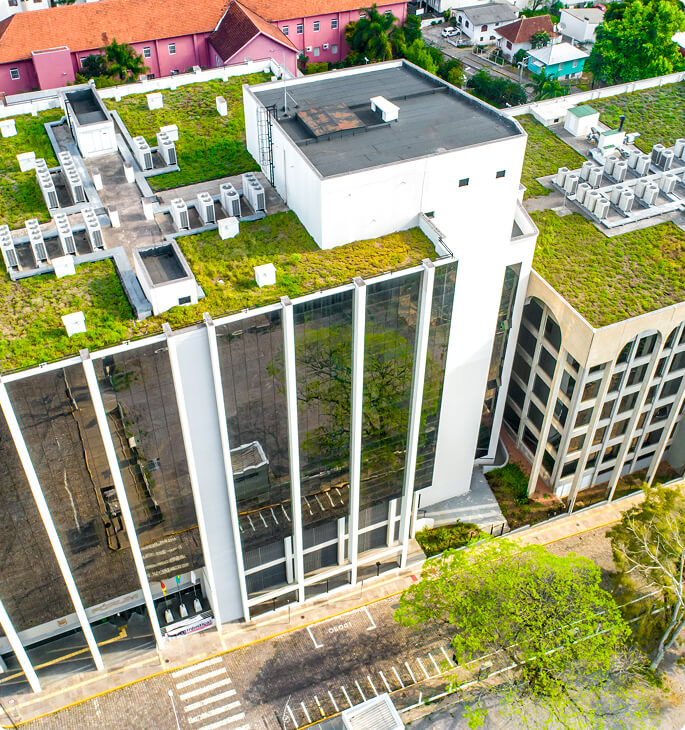
Champion manages commercial green roof projects nationwide. A green roof system involves high-quality waterproofing, drainage, and appropriate vegetation selection. Green roof systems interact directly with the waterproofing membrane, so every green roof installation is approached as a building system rather than a decorative component. Verifying proper system compatibility and manufacturer requirements ensures your green roof system is built to last while providing many environmental benefits.
Extensive green roof systems are typically shallow and lightweight. They use durable, drought-tolerant green roof plants selected for high weather exposure and low maintenance. Because of their reduced load, many portfolio managers choose extensive green systems when sustainability goals are important but structural reinforcement must be minimized.
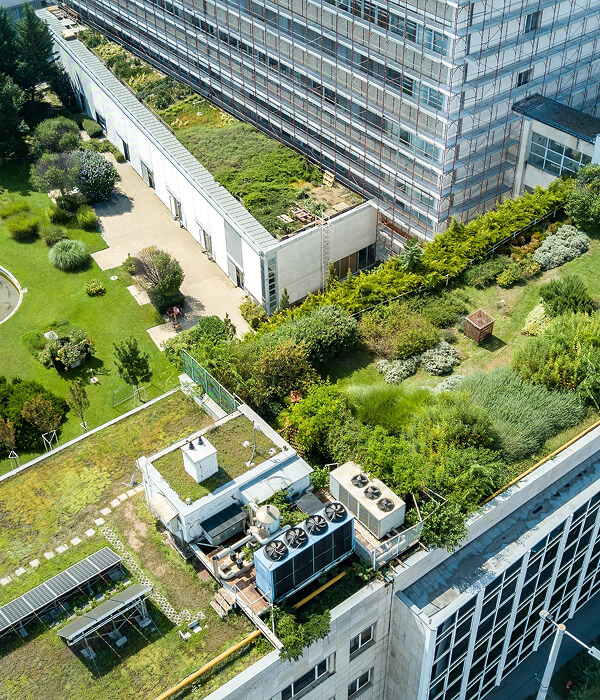
An intensive green roof supports deeper soil profiles and greater plant growth. These systems often function as garden roofs or accessible green space on multi-family structures, office buildings, and similar buildings. These systems are more common on commercial properties where the building structure is designed to support heavier loads.
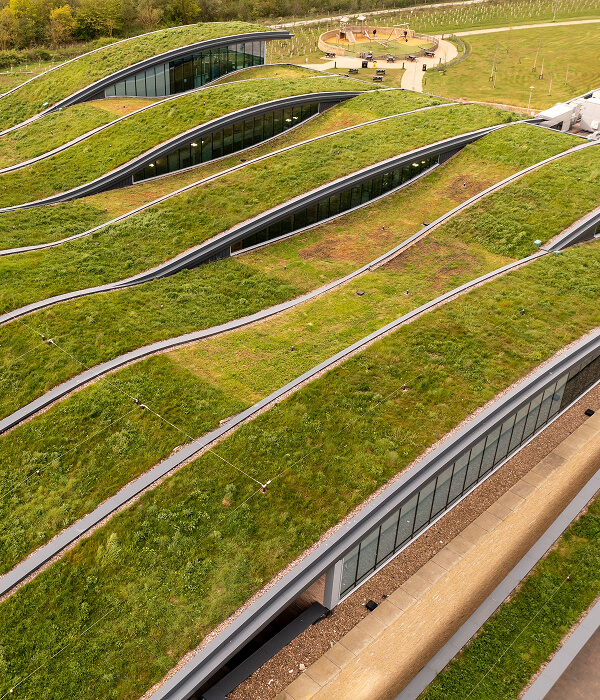
Semi-intensive green roof systems provide a middle ground between extensive and intensive systems. They offer more plant flexibility than extensive systems, but they’re lighter, creating less structural demand than an intensive green roof. Some commercial green roof projects use this design to balance performance and feasibility, especially when structural capacity is a concern.
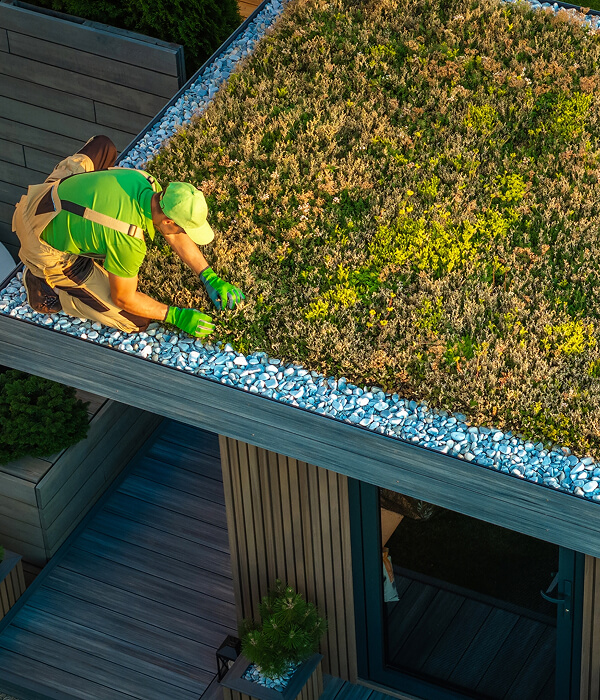
Conventional roofs absorb and transfer heat directly into the building envelope, increasing mechanical demand. A commercial green roof moderates surface temperatures through vegetation and growing media. On large commercial roof surfaces, reducing heat transfer at the root level can significantly reduce mechanical cooling demand, which benefits both environmental and organizational energy performance.

Dark roofing materials retain and radiate heat into surrounding urban areas. A vegetated roof interrupts that cycle by replacing exposed membrane with plant coverage. On dense commercial properties, green roof systems can help reduce localized surface temperatures and contribute to broader heat island mitigation efforts.

Even if it seems counter-intuitive, green roofs protect roofing membranes. UV exposure and repeated thermal expansion can shorten membrane lifespan, but the vegetation shields the membrane from direct sunlight, extreme temperatures, and weather conditions. By reducing environmental stress on the membrane, properly installed systems can extend the underlying roof assembly’s service life.

Unmanaged rainfall quickly becomes runoff on traditional roof surfaces, increasing strain on municipal drainage systems. Green roof assemblies absorb and temporarily retain stormwater within layered growing media and drainage components. Many municipalities require stormwater management strategies for large commercial properties. Green roof systems can help reduce runoff rates and support compliance with local stormwater regulations.

Green roofs can be effective insulators, even in the winter. Rather than letting heat escape through the top of the building, the thick soil beds, roots, and over-wintering vegetation helps trap that heat in the building. This reduces heating and cooling costs as well as wear and tear on the building’s heating system. The presence of a green roof, and the heating cost benefits associated, allow property managers to increase ticket or rent prices.

Many commercial buildings lack accessible outdoor space, especially in urban areas. For office buildings, multi-family developments, and institutional properties, accessible green roofs can increase tenant appeal and provide usable outdoor space without expanding the building footprint. Some designs integrate solar panels alongside vegetation to maximize usable rooftop space efficiently and increase a building’s marketability.


Universities, healthcare facilities, corporate offices, and multi-family developments can be ideal candidates for commercial green roofing, especially when these systems are implemented as part of their sustainability initiatives. Organic roofing helps provide rooftop amenities for patients in a hospital, or tenant appeal for apartment buildings, while facilitating temperature and stormwater control.
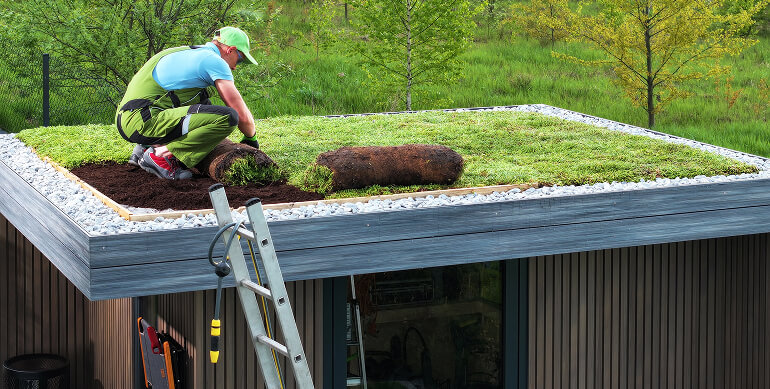
Regardless of whether the green roof system is intensive or extensive, it will add more weight to the roof than a traditional roofing system. The building must be equipped to handle that weight. Before any green roof project proceeds, Champion coordinates engineering review to determine structural feasibility and ensure the system performs safely throughout its lifespan.
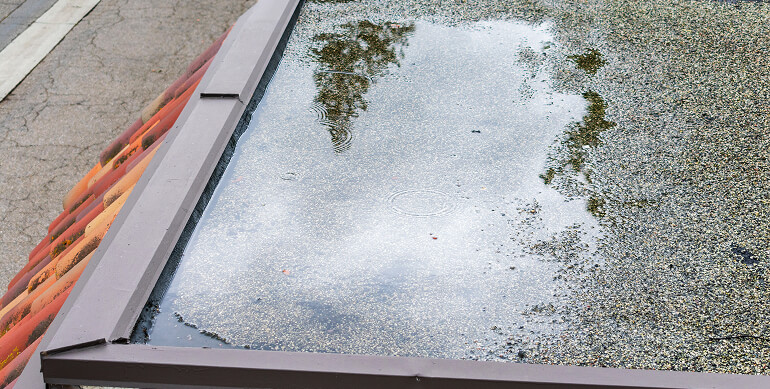
Green roofs are excellent at controlling runoff, but they still require proper drainage. Without appropriate drainage systems, both vegetation and membrane performance can be affected. Our green roof installation approach integrates layered drainage systems designed specifically for both the property and the green materials to manage stormwater runoff effectively.
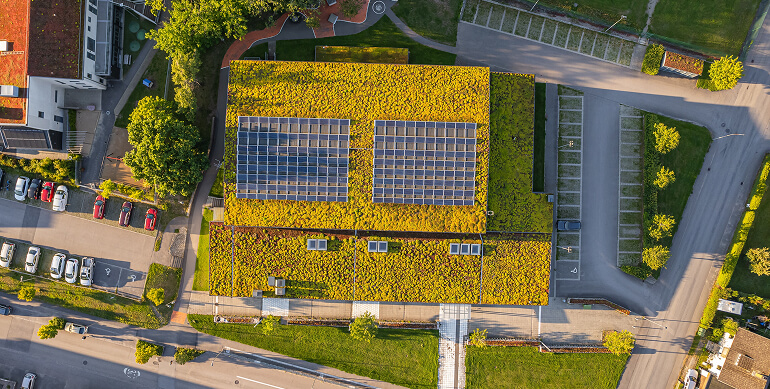
Green roofs in drought-prone areas must be able to handle prolonged dry weather. Irrigation systems work well if they’re matched to the plant selection, and that plant material is matched to the climate. We design irrigation systems with expert research to provide positive plant growth and eliminate wasted water.
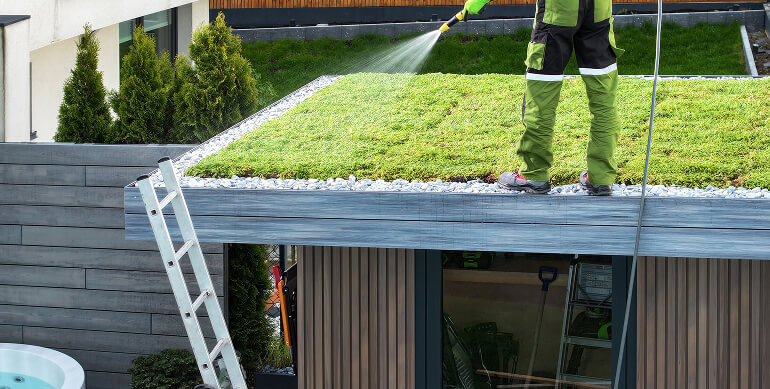
Green roof system maintenance isn’t heavy-handed, but these systems do require consistent oversight. Because the waterproofing membrane sits beneath multiple system layers, proper installation and leak detection are critical. We help building owners establish maintenance protocols during the design phase so vegetation care, drainage inspection, and roof access remain accessible and manageable, allowing our green roof manufacturers to maintain your building’s efficiency.
| System Type | Lifespan | Maintenance Needs | Installation Costs | Best For |
|---|---|---|---|---|
| Commercial Green Roofing | 30-50+ years | Moderate | Higher upfront | Sustainability goals, stormwater management |
| Single-Ply (TPO/PVC) | 20-30 years | Low | Moderate | Energy efficiency priority, large flat surfaces |
| Modified Bitumen | 20-25 years | Moderate | Moderate | Heavy foot traffic |
| Built-Up Roofing | 20-30 years | Moderate-High | Moderate-High | Redundant protection |
When properly installed and maintained, green roof systems can protect the roof membrane for decades.
Yes. They improve energy efficiency and reduce heating and cooling costs.
No. Structural review is required before installing green roofs to determine structural capability and operational needs.
They retain rainfall within the plants and soil and work with the drainage system to reduce stormwater runoff.
A commercial green roof system requires vegetation care, irrigation system inspection, and drainage review. Green roofing is a low-maintenance system that, when given proper care, can last for decades.
Yes. Many green roof systems integrate solar panels for added energy efficiency.
A living roof refers to vegetated systems broadly. Garden roofs are typically accessible versions.
Contact Champion today to discuss your building structure and long-term performance goals to determine whether a commercial green roof system is right for your property.
"*" indicates required fields


