


24/7 Emergency Support - Call Now

24/7 Emergency Support - Call Now

Call Now(877) 242-6748

Commercial Roofing for Mixed-Use Developments

Roof systems built for properties where retail, residential, office, and hospitality spaces operate side by side.

IBEC logo with hexagon and sphere, text highlights commercial roofing and large-loss restoration.
Black and white GAF Master logo with "GAF MASTER Certified Commercial Roofing Contractor" in a diamond for large-loss, flat roof restoration.
GAF Master Elite logo with "Factory Certified" and "Golden Pledge" for commercial roofing, storm restoration, and large-loss recovery.
CRRC logo with "Cool Roof Rating Council" under a stylized commercial flat roof, related to large-loss restoration.
Gray Energy Star logo symbolizing energy efficiency in commercial roofing and large-loss restoration.
Gray BBB Accredited Business badge with A+ rating for commercial roofing and storm damage restoration.

Why Roof Choice Matters for Mixed-Use Properties

Mixed-use developments require roof systems that protect multiple occupancies while supporting tenant safety, long-term durability, and uninterrupted daily operations.

Mixed-use roofing isn’t straightforward. One building might contain street-level retail, offices above, and residential units higher up. Others combine hotel space with commercial storefronts or flex industrial areas. Main street projects, vertical mixed-use towers, horizontal mixed-use campuses, and transit-oriented developments all present different access and scheduling challenges. Installation planning, lifecycle cost, and portfolio consistency matters when people live and work under the same structure.

300,000+

Sq. Ft. Projects

GAF Platinum Elite Contractor
99.5%

Customer Satisfaction

20+ Years

of Experience

Trusted by Property Owners and Facility Managers Nationwide

What We Offer

Top Roofing Types for Mixed-Use Developments

TPO Roofing Systems

TPO roofing is often used for mixed-use commercial roofing. This single-ply membrane performs well across large low-slope areas found in retail-residential and office-residential developments and installs quickly with minimal interruption.

Pros:
  • Reflective surface reduces rooftop heat gain across residential and office occupancies
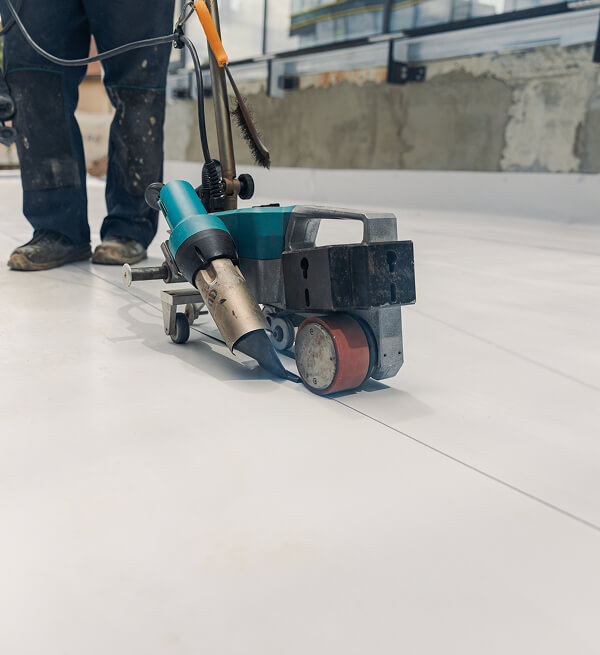
  • Heat-welded seams deliver consistent watertight protection at rooftop penetrations and transitions
  • Lightweight membrane performs reliably on complex, multi-level structural deck systems

Learn More White right-pointing arrow on blue square, commercial roofing and storm damage restoration icon.

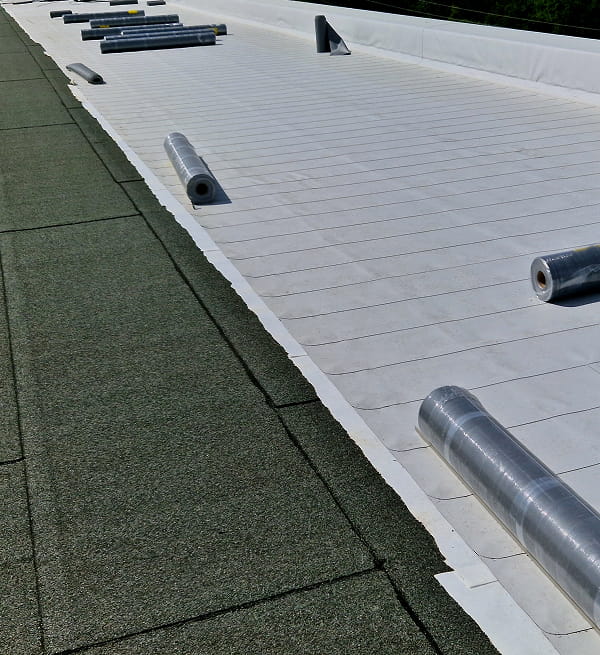
Commercial roofing materials on a flat roof for large-loss recovery and storm damage restoration.

EPDM Roofing Systems

EPDM roofing provides flexible protection for mixed-use roofing projects. This is key for older buildings where natural structural movement is expected and long service life is an important planning consideration.

Pros:
  • Flexible membrane accommodates structural expansion and contraction across large mixed-use developments
  • Proven durability supports long-term property management planning and predictable maintenance costs
  • Repairs can often be completed efficiently without causing widespread disruption to tenants or daily operations

Learn More White right-pointing arrow on blue square, commercial roofing and storm damage restoration icon.

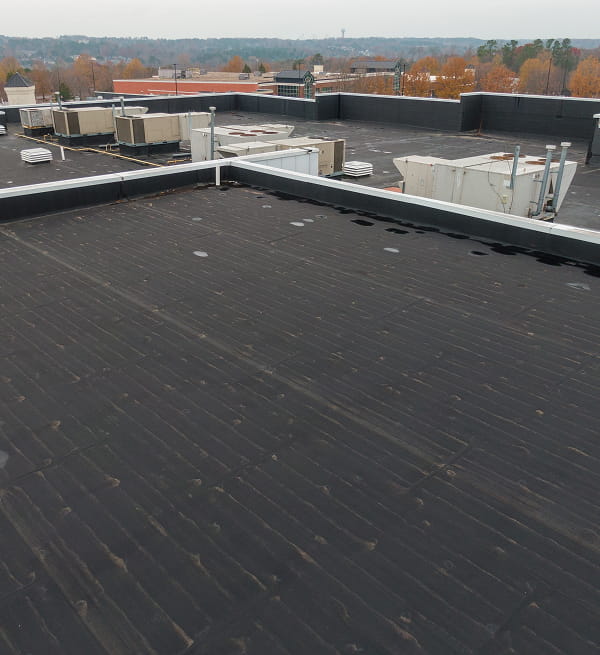
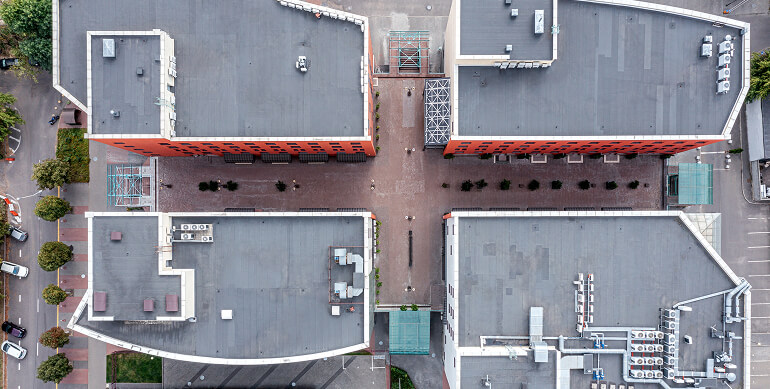
Flat commercial rooftop with HVAC units, ideal for large-loss recovery and storm damage restoration.

PVC Roofing Systems

PVC roofing systems suit mixed-use developments with restaurant exhaust, hotel kitchens, or rooftop mechanical exposure. Its chemical resistance can perform better in these environments than other roofing systems.

Pros:
  • Chemical resistance supports reliable performance reducing risk in restaurant-heavy developments
  • Welded seams strengthen long-term watertight integrity across complex roof transitions, penetrations, and mechanical curbs
  • Reflective membrane helps meet energy management goals by reducing rooftop heat absorption and cooling demand

Learn More White right-pointing arrow on blue square, commercial roofing and storm damage restoration icon.

Modified Bitumen Roofing

Modified bitumen roofing provides layered durability for high-traffic commercial roofing. It’s one of the best options for buildings where frequent rooftop access for mechanical maintenance and repairs is expected.

Pros:
  • Multi-ply construction improves puncture resistance near service areas with frequent technician access
  • Reliable performance around rooftop equipment and repeated maintenance traffic across mixed-use commercial properties
  • Suitable for phased, tenant-safe roof replacement programs that minimize disruption across occupied buildings

Learn More White right-pointing arrow on blue square, commercial roofing and storm damage restoration icon.

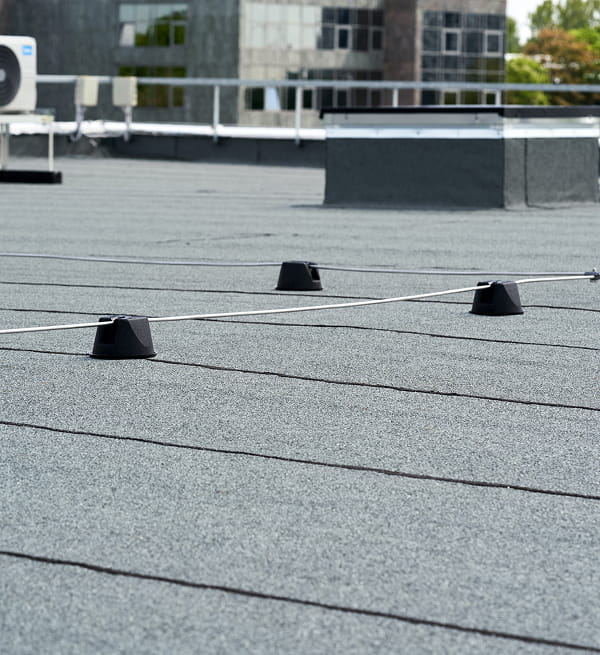
Flat commercial roofing with safety cable system, stanchions, and rooftop units for storm damage restoration and large-loss recovery.

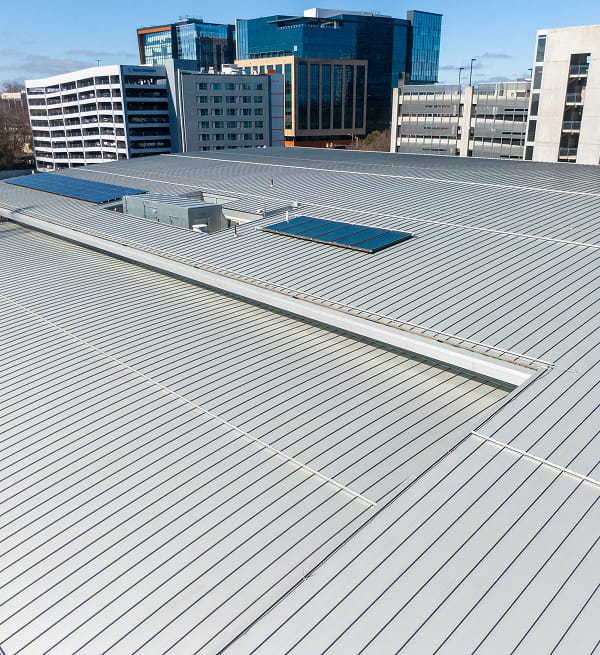
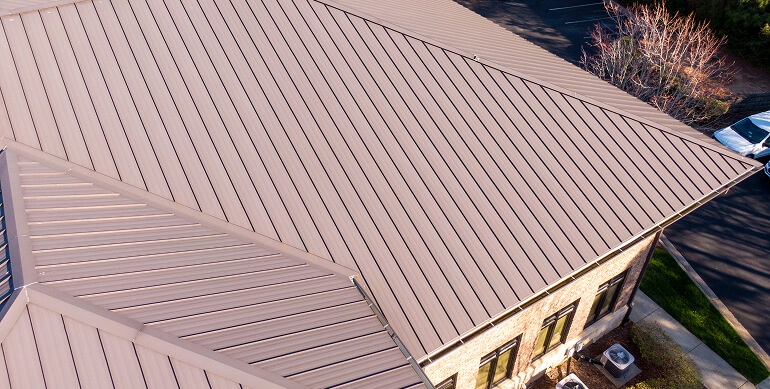
Metal Roofing Systems

Metal roofing systems are often selected for visible main street projects and urban village developments. They’re also highly durable and wind-resistant, making them suitable for any climate or environment.

Pros:
  • Long service life reduces full replacement frequency and supports long-term capital planning and asset value
  • Strong wind resistance supports performance in exposed urban locations and elevated roof areas, leading to lower replacement costs
  • Clean architectural finish complements retail storefronts, office facades, and mixed-use design aesthetics

Learn More White right-pointing arrow on blue square, commercial roofing and storm damage restoration icon.

Commercial roofing flat metal roof with solar panels and large-loss restoration in progress.

Key Roof Considerations for Mixed-Use Developments

Mixed-use roofing requires coordination across multiple tenant types, access points, and occupancy schedules while maintaining safety and ensuring that production can continue as normal, minimizing disruption. Reviewing key factors in mixed-use roofing installation can protect consistency across multi-building portfolios while maintaining a predictable budget.

Tenant Safety and Access Control

Retail customers, residents, office workers, and hotel and restaurant guests may occupy the same structure. To keep them safe, work zones must be controlled carefully. Clear communication and staged access routes support a tenant-safe roof replacement without compromising daily activity. Ensuring safe, clear maintenance access routes leads to lower downtime if damage occurs.

Phased Installation and Occupancy Scheduling

Mixed-use commercial roofing projects often require phased sequencing to work around various schedules. Some tenants operate during business hours, while others remain occupied overnight. Planning accounts for these patterns to maintain as much consistency across the property as possible, minimizing disruption and aiding lease stability.

Rooftop Equipment and Shared Infrastructure

There are rarely simple shutdowns in mixed-space structures. Vertical mixed-use and transit-oriented developments often contain mechanical systems that are shared between spaces. Roofing systems need to integrate around equipment without interfering with services used by multiple occupancies.

Drainage and Structural Complexity

Horizontal mixed-use campuses and retail-residential developments may include architectural designs that feature multiple roof elevations and drainage transitions. Proper detailing on these surfaces is critical to prevent water migration under the roofing systems as well as between connected structures while maintaining aesthetic integrity.

Long-Term Asset Planning

Mixed-use roofers should recommend systems aligned with property management budgets and long-term ownership strategy. Professional building roofing decisions should balance durability, maintenance access, and tenant expectations, and it’s the contractor’s job to provide the necessary guidance to make those decisions.

Common Roofing Challenges Mixed-Use Developments Face

Challenge 1: Multiple Occupancies

Mixed-use buildings serve different tenant groups, each of which has its own unique schedule and sensitivities. Retail storefronts, residential units, and office spaces may operate at the same time. Champion coordinates work carefully, stages materials deliberately, and maintains communication across stakeholders to protect tenant relationships during mixed-use roofing projects.

Challenge 2: Shared Infrastructure

Mechanical systems and service pathways are often shared between occupancies in vertical mixed-use projects. Installation must account for access and operational continuity. Champion sequences work deliberately to avoid disrupting hotel mixed-use, office-residential, and retail-residential operations.

Challenge 3: Limited Urban Access

One unique aspect of mixed-space projects is that main street and urban village developments often restrict delivery access and staging space. Sidewalk traffic and neighboring properties add complexity. Champion has experience in these areas and plans mobilization carefully to reduce congestion and maintain safe access around the site.

Challenge 4: Long-Term Tenant Retention

Roof work in mixed-use environments can influence tenant satisfaction and lease stability. Poor coordination leads to complaints and operational friction, and mediocre work can decrease curb appeal. Champion knows that keeping its customers’ customers happy is essential. We prioritize tenant-safe roof replacement practices and clear communication throughout our detailed installation.

Frequently Asked Questions

About Mixed Use Roofing

  • TPO, EPDM, PVC, modified bitumen, and metal systems are commonly used depending on design and occupancy type.

Get Expert Roofing Recommendations for Your Mixed-Use Property

Get in touch with Champion to request a mixed-use roofing proposal designed for durability, tenant safety, and coordinated installation planning.

Call Now
(877) 242-6748
Get Started With Champion Roofing

"*" indicates required fields

Step 1 of 3