24/7 Emergency Support - Call Now

24/7 Emergency Support - Call Now
Multi-layer, established roofing material designed for the most demanding commercial roof conditions, machinery, and traffic.
Bitumen roofing is a practical choice for low-slope roofs that require layered protection rather than single-sheet coverage. While far from a new roofing material on the market, it provides trusted results for commercial properties.
In commercial settings, bitumen roofing most often refers to modified bitumen roofing systems constructed with reinforced sheets bonded into a continuous membrane. These systems are commonly used where rooftop equipment, heavy service traffic, and weather exposure are part of daily building operations. Bitumen roofing offers reliable membrane strength with simple maintenance and durable protection against unexpected weather conditions.
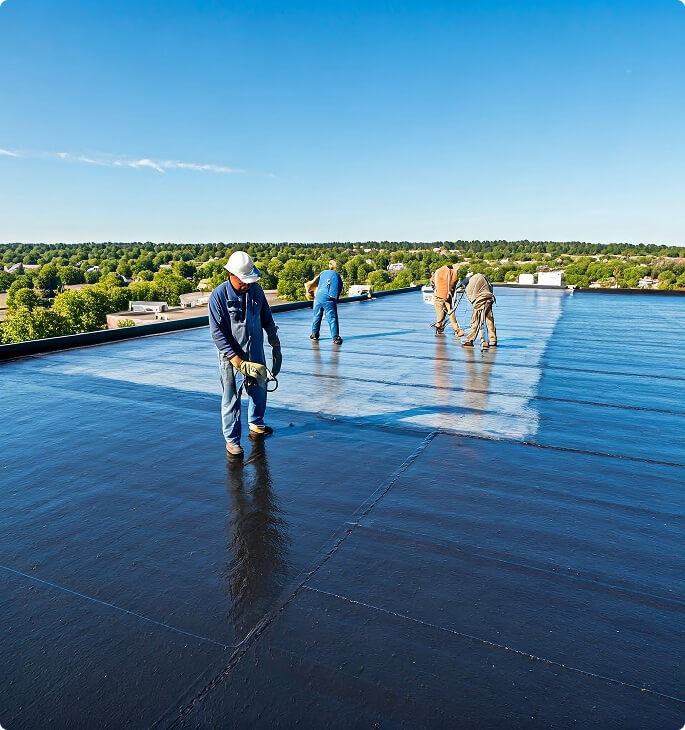

What We Offer
Champion installs bitumen roofing on commercial and industrial buildings nationwide. Before recommending a modified bitumen roofing system, we evaluate deck stability, insulation and drainage layout, and compatibility with adjacent roofing systems. We ensure each roof assembly aligns with manufacturer specifications and supports warranty compliance, and provide 24-48 hour response time during times of crisis.
SBS modified bitumen roofing incorporates rubber modifiers blended into asphalt to improve flexibility. These modified bitumen membranes are reinforced and layered to create a resilient surface capable of handling building movement and the various traffic low-slope roofs often experience. The result is a mod bit roofing system that adapts to seasonal expansion and contraction.
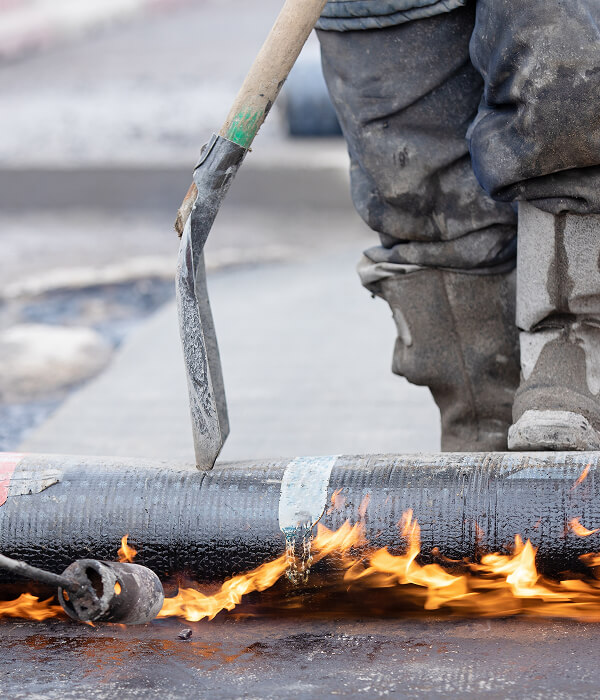
APP (Atactic Polypropylene) modified bitumen roofing systems use plastic asphalt modifiers to improve heat tolerance, UV resistance, and surface durability. This type of mod bit roofing is applied with torches, creating strong bonds between sheets. APP systems are frequently selected for commercial properties with sustained sun exposure thanks to its UV resistance.
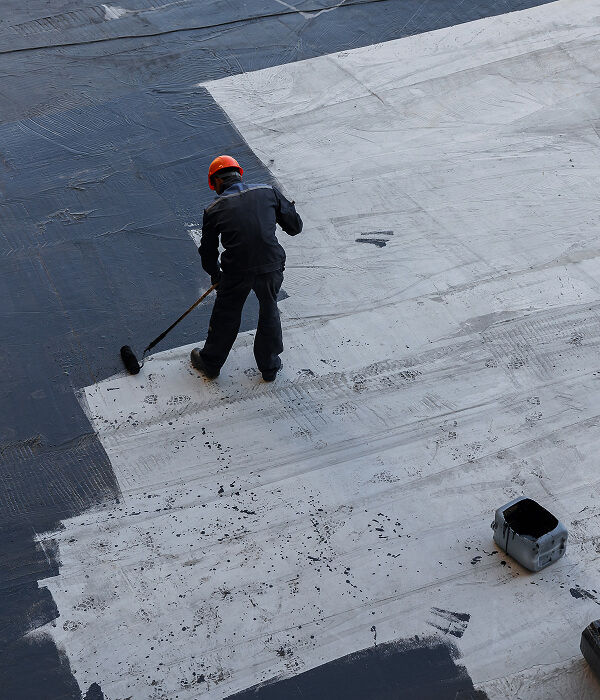
Modified bitumen roofing systems rely on a layered construction system. As the top surface weathers from exposure, traffic, or other factors, the underlying plies continue to provide protection. This redundancy supports long-term performance for commercial properties with active rooftops.

Rooftops often house various mechanical equipment, and many low-slope roofs carry HVAC units, piping, and service walk paths. Technicians need to access the equipment, adding stress to the structure. Modified bitumen roofing tolerates repeated traffic and can be reinforced in high-use zones without replacing the entire membrane.

Modified bitumen can easily integrate with built-up roofing systems (BURs) during renovations. This flexibility simplifies the transition from older built-up roofing systems, allowing the new system to upgrade while keeping the existing system in place during renovation.

Thanks to their design, commercial bitumen roofing can often be repaired in localized sections. Small tears and punctures can be addressed without costly membrane removal. This allows building operators to treat specific areas of concern without disrupting the entire roof performance.

Modified bitumen roofing systems have decades of proven benefit across commercial and industrial buildings. Its performance history helps commercial properties plan maintenance intervals and predict wear with realistic expectations for how the system will perform over time.

When properly installed, a modified bitumen system provides excellent waterproofing protection across broad roof areas. The strong fusion between layers reduces the likelihood of widespread membrane failure, ponding, and other issues, increasing protection against unexpected weather conditions or crises.


Bitumen roofing is one of the most widely used systems across a variety of commercial buildings. Designers and engineers frequently recommend it for commercial and industrial buildings with expansive low-slope roofs and regular rooftop activity.
Commercial properties such as universities, healthcare campuses, manufacturing facilities, and multi-family developments rely on modified bitumen roofing systems where durability and repair access matter. These properties often house sensitive products and services that require a durable, trustworthy defense. Compared to some lighter roofing systems, mod bit roofing performs well in traffic-heavy environments.
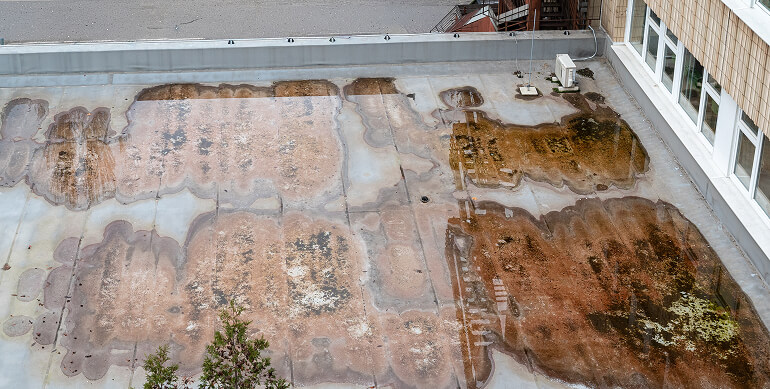
Standing water, also known as ponding, occurs when puddles form in the same areas on a flat roof. It creates stress on the roofing membrane, leading to tears, separation, and wear between layers and seams. Champion evaluates drainage design, insulation slope, and structural deflection to reduce prolonged saturation on low-slope roofs using modified bitumen roofing systems.
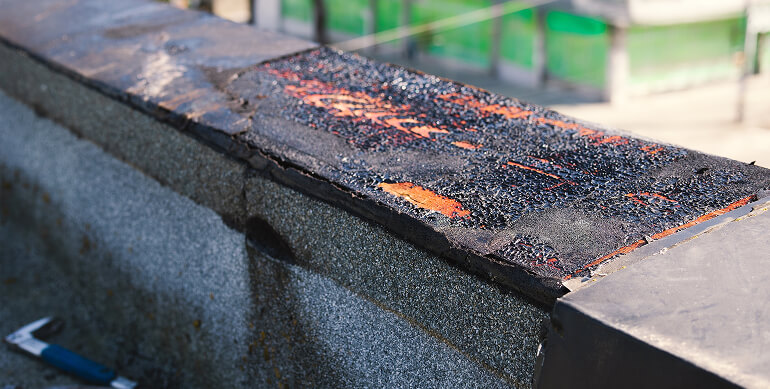
Temperature swings affect all roofing systems. Heat causes expansion, while cold temperatures cause contraction, both of which can damage layer adhesion and lead to leaks over time. When installing modified bitumen systems, we carefully detail seams, transitions, and perimeter edges to ensure the mod bit roofing assembly accommodates movement without premature failure.
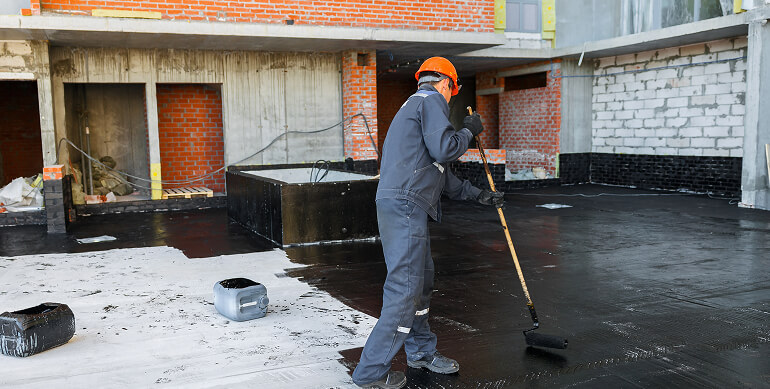
Modified bitumen performance depends on disciplined workmanship. The system will only perform optimally if it is installed by an experienced crew. Whether using torch application or cold adhesives, our crews follow manufacturer-approved installation methods to ensure commercial bitumen roofing is properly installed and can withstand rooftop traffic or changing weather conditions.
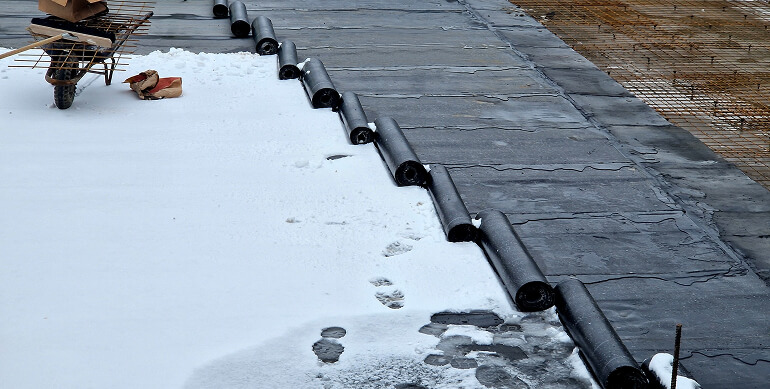
Many commercial properties incorporate multiple roofing materials and systems across a campus. This may be due to building design, age, or the building’s intended use. No matter the reason, it is crucial that they work together. We coordinate transitions between modified bitumen roofing, built-up roofing, and adjacent assemblies so the entire envelope functions consistently.
| System Type | Lifespan | Maintenance Needs | Installation Costs | Best For |
|---|---|---|---|---|
| Metal Roofing | 40–70+ years | Minimal | Higher upfront | Structural strength, long-term durability |
| Single-Ply (TPO/PVC) | 20–30 years | Low | Moderate | Large open roof areas |
| Modified Bitumen | 20–25 years | Moderate | Moderate | Traffic tolerance, flexibility |
| Built-Up Roofing | 20–30 years | Moderate-High | Moderate-High | Multi-layer redundancy |
Modified bitumen roofing is an asphalt-based membrane system reinforced with polymers for flexibility, strength, and redundancy.
Yes. Mod bit roofing systems are widely used on low-slope roofs across commercial properties.
Many modified bitumen roofing systems perform for 20 to 25 years with routine maintenance.
Modified bitumen may be torch-applied or adhered using cold- or self-adhered systems depending on project needs.
Built-up roofing systems use site-applied plies, while modified bitumen systems use factory-produced sheets. Modified bitumen is typically easier to install and imposes less stress on the infrastructure.
Modified bitumen roofing systems can often be installed over or in conjunction with properly prepared substrates.
Yes. Modified bitumen’s layered sheets provide a durable surface that can withstand punctures, wear, and traffic.
Schedule a commercial bitumen roofing evaluation to determine whether a mod bit roofing system aligns with your facility’s performance and lifecycle requirements.
"*" indicates required fields


