24/7 Emergency Support - Call Now

24/7 Emergency Support - Call Now
Multi-ply asphalt assemblies are engineered for durable commercial roof performance with excellent waterproofing characteristics.
Built-up roofing has been used in commercial roofing for more than a century. A built-up roof (also known as a “BUR”) is constructed by layering roofing felts with hot asphalt to form a reinforced membrane over the roof deck. The result is a low-maintenance commercial roofing system built around redundancy and strength rather than single-layer coverage, resulting in lower long-term roofing costs.
For facilities with large low-slope footprints and routine rooftop activity, commercial built-up roofing provides consistent performance, long service life, and repair flexibility across demanding environments.
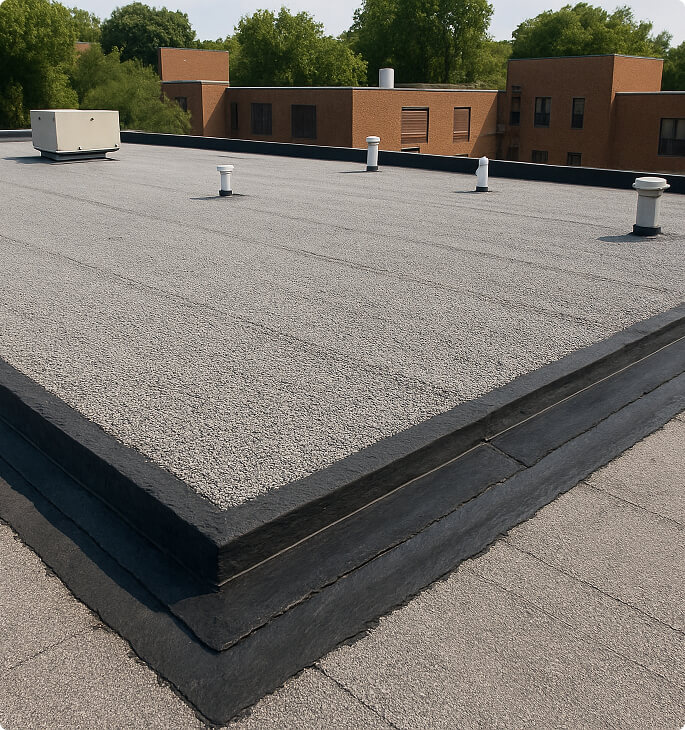

What We Offer
Champion installs built-up roofing systems across commercial roofing projects nationwide. Before work begins, we assess the roof deck, insulation layout, drainage flow, and compatibility with adjacent commercial roofing systems. Each roofing system is installed according to manufacturer standards so the completed built-up roof performs as designed. We provide reliable and timely assistance in times of crisis and support NDL warranties.
A gravel-surfaced built-up roof uses multiple layers of roofing felts set in hot asphalt, finished with aggregate to protect the membrane. The gravel shields the roofing system from UV exposure and increases durability in high-traffic areas common in commercial roofing. The gravel provides added grip in accident-prone areas, such as around equipment and walkways.
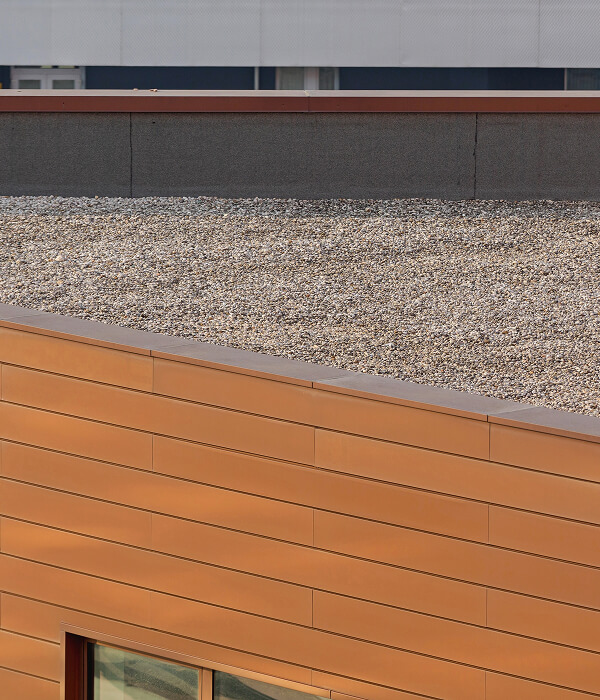
Smooth-surfaced assemblies use roofing felts and hot asphalt with a protective cap sheet rather than loose gravel. This type of built-up roof is easier to inspect for damage and is often selected for industrial and commercial roofing projects requiring regular maintenance access. The lack of gravel also lightens the system, reducing the structural load on the building.
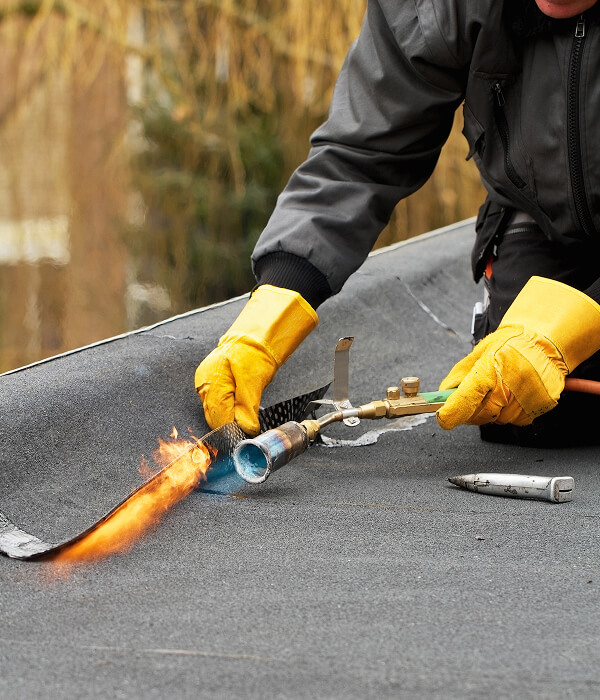
A built-up roof doesn’t rely on a single membrane. Multiple plies of roofing fabrics embedded in hot asphalt create depth within the roofing system. That redundancy helps commercial built-up roofs tolerate localized damage without immediate widespread failure.

Commercial properties have been relying on built-up roofing systems for decades. Its long performance record provides predictable maintenance planning for commercial properties managing large, high-traffic rooftops. Property managers know how these systems will age and can plan accordingly.

Many commercial roofing projects involve heavy equipment and routine service traffic, which is where BUR systems truly excel. The property is protected from harsh rain and unexpected weather conditions due to built-up roofing’s heavy material. The multi-ply structure of a built-up roof withstands repeated wear and use from technicians accessing rooftops without compromising the entire roofing system.

Built-up roofing can integrate with existing or new commercial roofing systems and materials during phased upgrades when properly designed. When sections of a commercial built-up roof require replacement, transitions can be coordinated and installed without disrupting adjacent roofing system components and facility operations.

Localized repairs can often be completed without replacing the entire built-up roof. This allows commercial roofing operators to address specific concerns or stress points while maintaining the integrity of the broader roofing system. Quality repairs at smaller scales are usually less expensive, ensuring buildings are repaired quickly and permanently.

BURs are known for their excellent waterproofing characteristics. Heavy rain, snow, or hail may form large puddles of still water. When properly installed, commercial built-up roofing forms a continuous barrier over the roof deck. Multiple layers of roofing felts and hot asphalt reduce the likelihood of widespread moisture intrusion across commercial built-up roofs.


Commercial built-up roofs are popular options for warehouses, healthcare facilities, educational campuses, and manufacturing operations. These commercial roofing environments often feature large low-slope footprints that collect lots of water and are filled with mechanical equipment that requires consistent rooftop access for repairs and maintenance.
The durability of a built-up roof, combined with the predictable maintenance cycles it offers, makes it a practical roofing system for heavy-traffic commercial properties requiring dependable long-term performance.
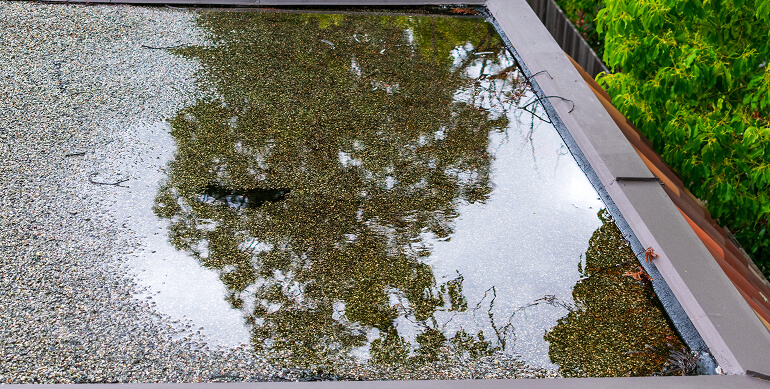
The weight of standing water adds stress to any roofing system. Ponding water tends to repeatedly gather in the same areas, which can wear out a roofing system over time. Champion evaluates slope conditions, drainage layout, and roof deck stability before installing commercial built-up roofing to reduce prolonged moisture exposure.
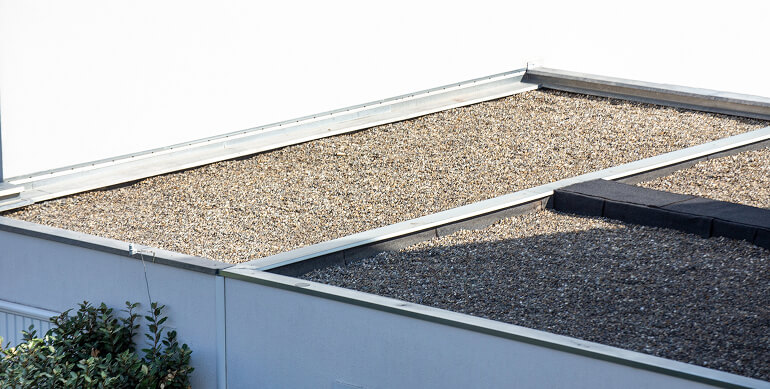
Buildings are exposed to temperature shifts that can affect commercial roofing assemblies throughout the year. The expansion and contraction they cause can tear or crack seams. We detail seams, edges, and penetrations carefully so the built-up roof maintains continuity despite rapid seasonal movement across the roof deck.
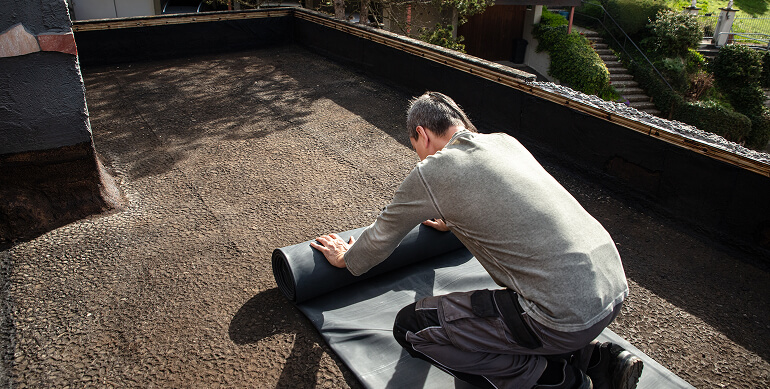
An effective built-up roof depends on consistent application of hot asphalt and correct layering of roofing felts. This requires extensive experience and knowledge to ensure that the roof is consistent in strength, waterproofing, and weight. Our crews follow disciplined installation procedures to ensure each commercial built-up roof is properly constructed and designed to last.
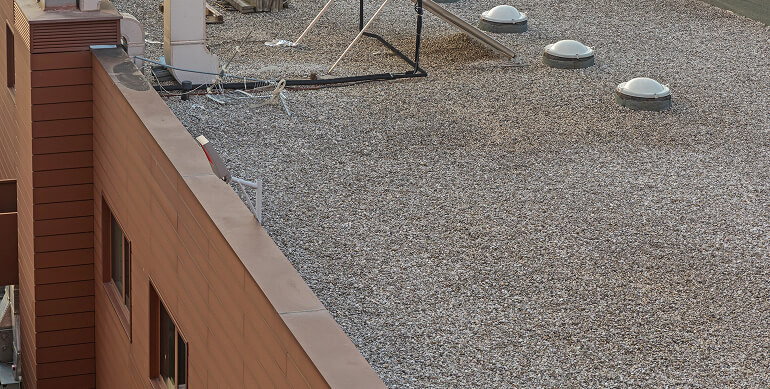
Most commercial roofing projects span significant square footage, sometimes crowding other materials, curbs, and varying roof deck heights. We coordinate transitions between sections of commercial built-up roofs and adjacent commercial roofing systems so the entire roofing system performs as a unified envelope.
| System Type | Lifespan | Maintenance Needs | Installation Costs | Best For |
|---|---|---|---|---|
| Built-Up Roofing | 20–30 years | Moderate-High | Moderate-High | Layered redundancy, heavy use |
| Metal Roofing | 40–70+ years | Minimal | Higher upfront | Structural durability, long-term use |
| Single-Ply (TPO/PVC) | 20–30 years | Low | Moderate | Large open roof deck areas |
| Modified Bitumen | 20–25 years | Moderate | Moderate | Traffic tolerance, flexibility |
Commercial built-up roofing is a multi-ply roofing system formed by layering roofing felts with hot asphalt over a roof deck. It provides a durable, long-lasting system that is suitable for heavy-traffic roof activities and water buildup.
Many commercial built-up roofs perform for 20 to 30 years, depending on maintenance and exposure conditions. BUR is a long-lasting option compared to other roofing systems.
Yes. Built-up roofing is commonly used across expansive commercial roofing systems.
A built-up roof uses multiple-layered plies, while single-ply systems rely on a single membrane sheet. This redundancy provides increased protection against damage and ongoing activity.
Localized repairs are typically possible without replacing the entire roofing system, depending on the roof condition and age, effectively lowering long-term roofing costs.
Traditional built-up roofing relies on hot asphalt to bond roofing felts into a cohesive roofing system.
It is well-suited for many commercial roofing applications, particularly large, high-traffic low-slope roofs.
Schedule a commercial built-up roofing evaluation to determine whether a built-up roof aligns with your facility’s performance and lifecycle requirements.
"*" indicates required fields


