


24/7 Emergency Support - Call Now

24/7 Emergency Support - Call Now

Call Now(877) 242-6748

Commercial Roofing for Healthcare Facilities

Roofing systems built for medical buildings and environments where care continues and disruption isn’t an option.

IBEC logo with hexagon and sphere, text highlights commercial roofing and large-loss restoration.
Black and white GAF Master logo with "GAF MASTER Certified Commercial Roofing Contractor" in a diamond for large-loss, flat roof restoration.
GAF Master Elite logo with "Factory Certified" and "Golden Pledge" for commercial roofing, storm restoration, and large-loss recovery.
CRRC logo with "Cool Roof Rating Council" under a stylized commercial flat roof, related to large-loss restoration.
Gray Energy Star logo symbolizing energy efficiency in commercial roofing and large-loss restoration.
Gray BBB Accredited Business badge with A+ rating for commercial roofing and storm damage restoration.

Why Roof Choice Matters for Healthcare Institutions

Healthcare facilities need dependable roofing systems to protect patients, support compliance standards, and allow clinical operations to continue without interruption.

Healthcare roofing demands disciplined execution inside live medical environments. Champion structures every project around clinical schedules, infection control protocols, and operational continuity from day one. Hospitals, regional health systems, rehabilitation campuses, and long-term care facilities require phased planning, structured staging, and crews trained to work above occupied spaces without compromising safety or compliance. This requires an experienced contractor.

300,000+

Sq. Ft. Projects

GAF Platinum Elite Contractor
99.5%

Customer Satisfaction

20+ Years

of Experience

Trusted by Property Owners and Facility Managers Nationwide

What We Offer

Top Roofing Types for Healthcare Facilities

TPO Roofing Systems

Healthcare facilities are often protected with TPO membranes. They’re selected for low-slope facilities due to their reflective performance, welded seams, and installation efficiency within controlled construction schedules. TPO is best suited for large healthcare facilities seeking efficient energy use.

Pros:
  • Reflective surfaces help manage rooftop heat and stabilize cooling loads in large medical buildings
  • Heat-welded seams provide consistent waterproofing around penetrations and mechanical systems
  • Lightweight membrane reduces structural load compared to heavier multi-ply systems

Learn More White right-pointing arrow on blue square, commercial roofing and storm damage restoration icon.

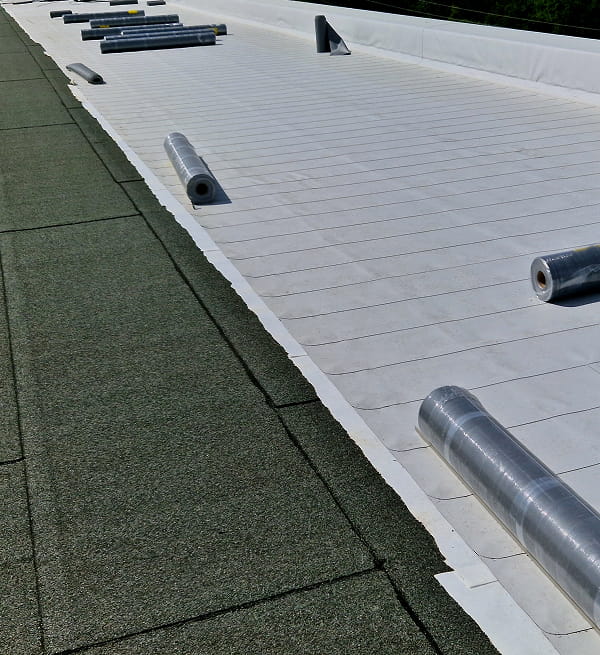
Commercial roofing materials on a flat roof for large-loss recovery and storm damage restoration.

EPDM Roofing Systems

EPDM roofing’s greatest asset is its flexibility. This membrane creates a durable layer of protection for healthcare facilities where long service life, degree of flexibility, and manageable maintenance requirements are key planning considerations.

Pros:
  • Flexible material accommodates seasonal building movement without overstressing seams
  • Proven durability supports predictable lifecycle budgeting and planning for facility managers
  • Repairs are typically straightforward, allowing crews to solve issues quickly in times of crisis

Learn More White right-pointing arrow on blue square, commercial roofing and storm damage restoration icon.

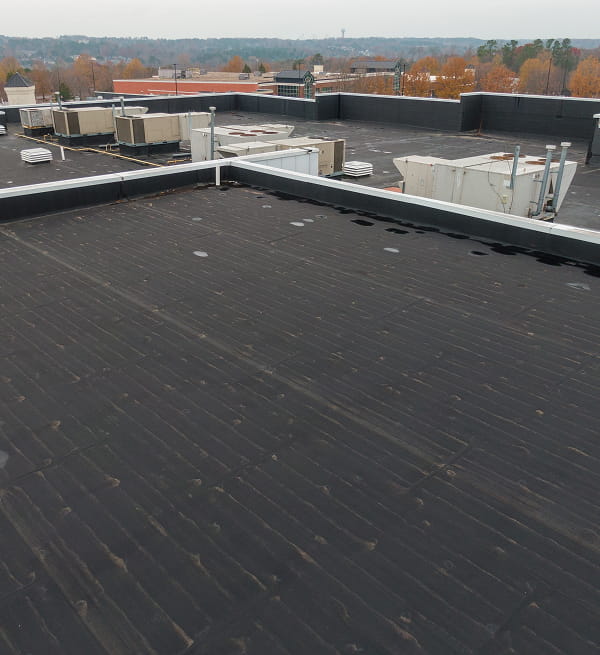
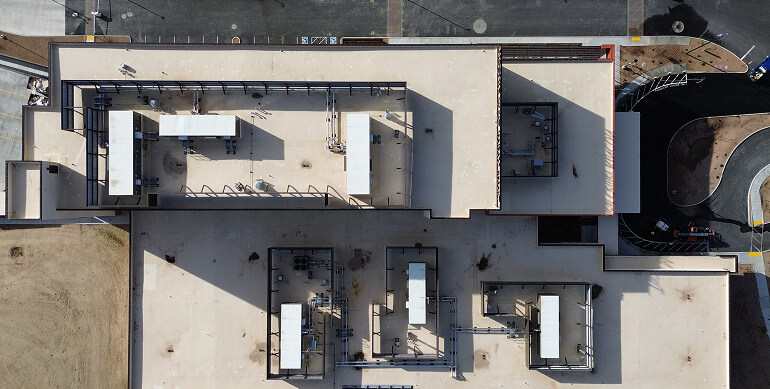
Flat commercial rooftop with HVAC units, ideal for large-loss recovery and storm damage restoration.

PVC Roofing Systems

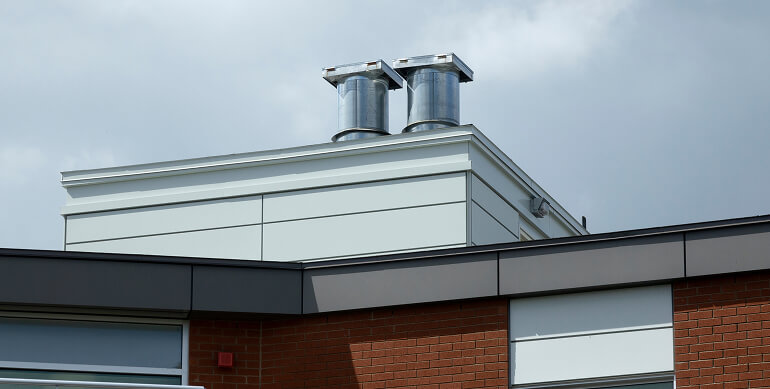
PVC roofing systems perform well in medical facilities with rooftop exhaust exposure. They provide chemical resistance and strong welded seams suited to healthcare roofing applications, especially labs and research buildings.

Pros:
  • Chemical resistance supports performance and compliance near lab exhaust and service areas
  • Welded seams strengthen long-term watertight integrity in complex assemblies
  • Reflective membrane options contribute to campus-wide energy efficiency goals

Learn More White right-pointing arrow on blue square, commercial roofing and storm damage restoration icon.

Modified Bitumen Roofing

Modified bitumen roofing provides multi-layer redundancy for healthcare facilities. These systems meet the needs of buildings requiring extreme durability around equipment, walk paths, and frequently accessed rooftop zones.

Pros:
  • Multi-ply construction improves puncture resistance near heavy rooftop equipment
  • Performs reliably under repeated technician access and heavy maintenance traffic
  • Suitable for phased re-roofing on active healthcare campuses

Learn More White right-pointing arrow on blue square, commercial roofing and storm damage restoration icon.

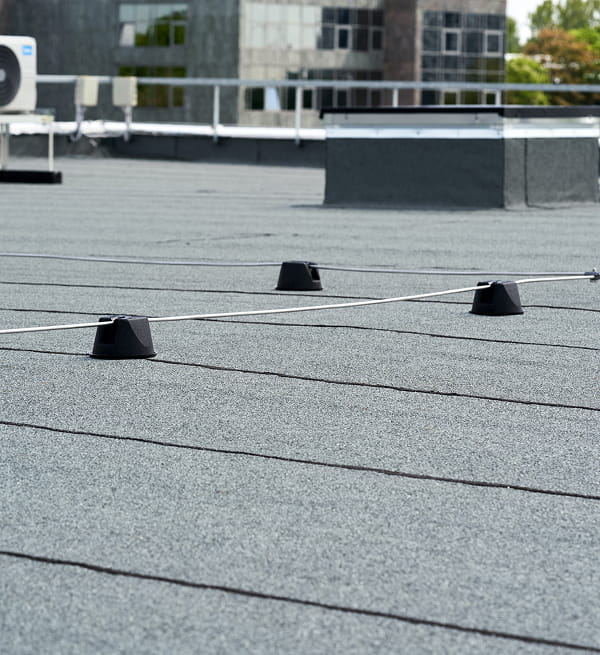
Flat commercial roofing with safety cable system, stanchions, and rooftop units for storm damage restoration and large-loss recovery.

Metal Roofing Systems

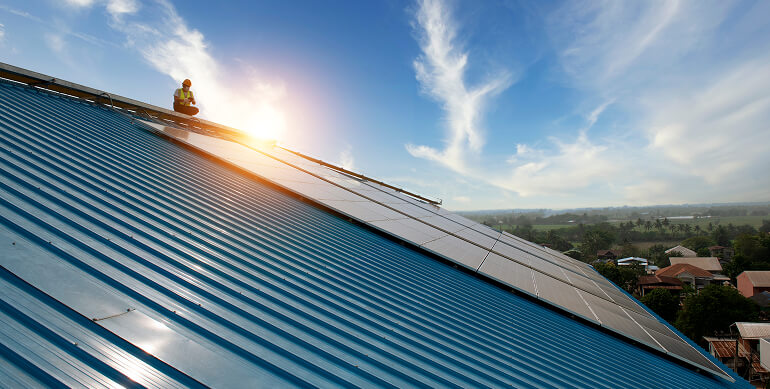
Metal roofing systems remain some of the most durable and long-lasting commercial roofing options. They’re selected for certain healthcare structures where long service life, structural strength, and wind resistance are important priorities.

Pros:
  • Extended lifespan reduces replacement frequency and lifecycle spending
  • Strong wind performance supports exposed healthcare facilities
  • Durable panels support aesthetic needs on visible campus buildings

Learn More White right-pointing arrow on blue square, commercial roofing and storm damage restoration icon.

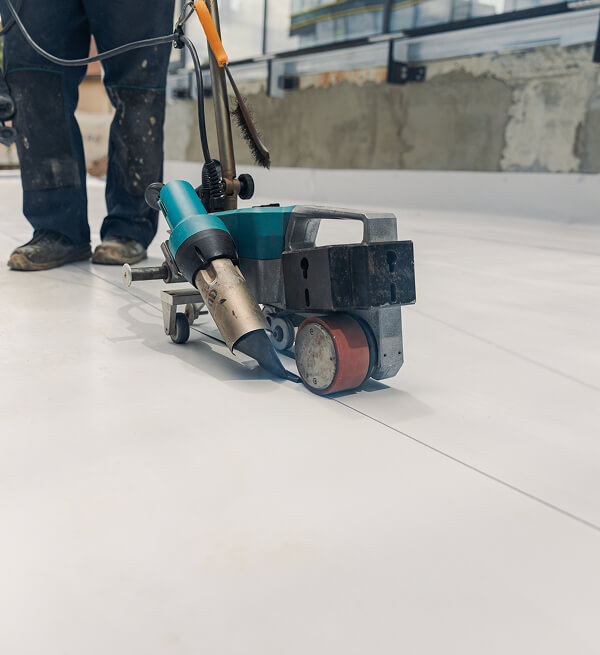
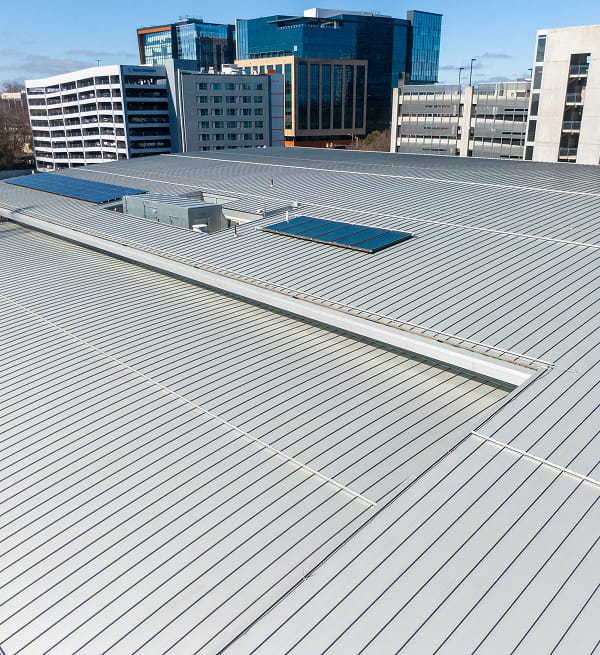
Commercial roofing flat metal roof with solar panels and large-loss restoration in progress.

Key Roof Considerations for Healthcare Facilities

Healthcare roofing projects succeed when operational continuity is treated as a core requirement, not an afterthought. Champion coordinates directly with facility leadership, infection control teams, and maintenance staff to sequence work, manage access points, and align installation schedules with patient care demands.

Infection Control and Patient Safety

Roof work above hospitals and clinics requires dust mitigation and controlled access to protect patients and ensure indoor air quality isn’t compromised. Champion plans staging carefully and coordinates daily with facility teams to reduce exposure risks during installation.

Continuous Operations and Scheduling

Many healthcare buildings operate 24/7, leaving no ideal time to perform the work. Roofing activity must account for quiet periods, emergency access routes, and procedural schedules. Champion’s phased work areas and constant coordination allows progress without overwhelming staff or patients.

Rooftop Equipment and Access

Medical facilities require lots of mechanical equipment, leaving most rooftops crowded with machines. HVAC units, exhaust systems, and specialty infrastructure leave limited working space. Champion roofing systems are installed in coordination with facility engineers to protect the building’s functions without disrupting these essential components.

Emergency Resilience and Weather Exposure

Hospitals frequently serve as community anchors during storms or regional emergencies. Communities need reliable roofs to protect these buildings during times of crisis. Drainage design, flashing details, and wind resistance all play a role in maintaining operational continuity.

Long-Term Asset Planning

Healthcare roofers have a responsibility to the facility and should recommend systems aligned with inspection cycles, staffing capacity, and capital planning. Durability matters, but so does maintenance practicality across single facilities and multi-building healthcare portfolios.

Common Roofing Challenges Healthcare Facilities Face

Challenge 1: Ongoing Patient Care

Construction in an active healthcare facility introduces several layers of complexity. Noise, vibration, and debris need to be controlled to avoid compromising patient comfort or medical procedures. Champion uses phased work zones, controlled deliveries, and structured communication to ensure roof installation while operations continue with minimal facility disruption.

Challenge 2: Infection Control Protocols

Healthcare roofing projects have to respect and exceed infection prevention standards. Poor coordination increases contamination risk, creating a dangerous patient environment. Champion works alongside facility leadership, controls access routes, and implements disciplined site practices designed specifically for medical environments.

Challenge 3: Congested Rooftop Systems

Hospitals and clinics house extensive rooftop equipment. As a result, they have limited rooftop space due to equipment and service infrastructure. Sequencing must be carefully planned and carried out. Champion plans thorough installation, protects existing systems, and coordinates shutdowns only when they are unavoidable.

Challenge 4: Aging Infrastructure

Many nursing homes, clinics, and community healthcare buildings continue to operate with aging roof systems. Deferred maintenance seems to stretch the budget, but it increases leak risk and potential for long-term interior damage costs. Champion conducts thorough assessments and recommends long-term solutions that reduce recurring repair cycles.

Frequently Asked Questions

About Healthcare Roofing

  • TPO, EPDM, PVC, modified bitumen, and metal systems are commonly used depending on building configuration and long-term planning priorities.

Get Expert Roofing Recommendations for Your Healthcare Facility

Request a structured healthcare roofing proposal with Champion to support coordinated planning, compliance focus, and minimal operational disruption.

Call Now
(877) 242-6748
Get Started With Champion Roofing

"*" indicates required fields

Step 1 of 3