24/7 Emergency Support - Call Now

24/7 Emergency Support - Call Now
A practical, asphalt-based solution for commercial roofs that need layered protection and predictable maintenance.
In commercial construction, asphalt roofing typically refers to built-up roofing (BUR) and modified bitumen systems designed for low-slope commercial roofs to prioritize water management and long-term durability. These asphalt roofing systems use multiple plies and durable asphalt to handle the realities of a busy commercial roof: foot traffic, rooftop equipment, penetrations, and long-term exposure to weather.
For building owners managing low-slope commercial roofs or a large flat roof, commercial asphalt roofing is often selected due to its redundancy, repairability, and steady lifecycle performance. Its layered construction allows contractors to isolate and address damage easily, helping teams stabilize problem areas without disrupting the entire roof system.

What We Offer
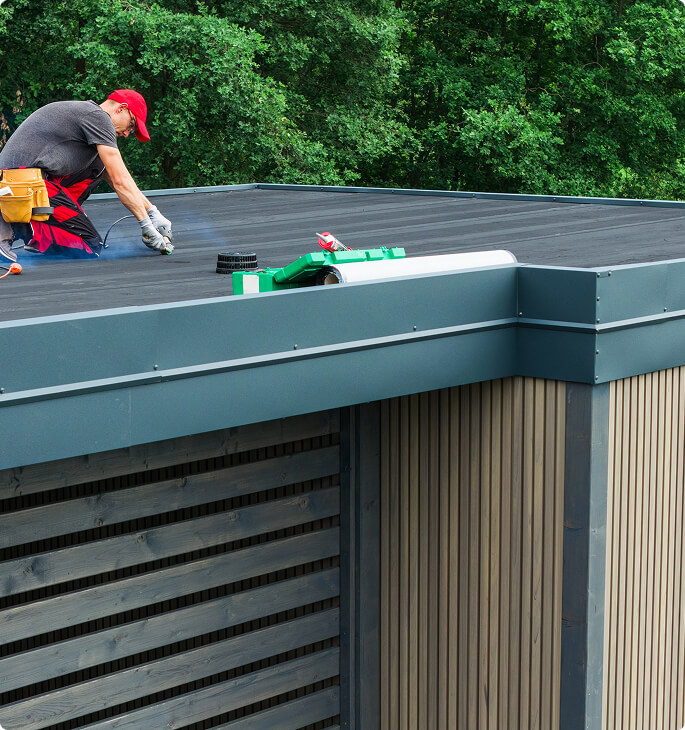
Champion designs, installs, and services commercial asphalt roofing systems nationwide. We review the full roof assembly, install it to strict manufacturer standards, and deliver durable roof assemblies that support long-term performance and maintain warranty eligibility, while ensuring they stand up to the operational demands of busy commercial properties.
Built-up roofing is a proven, multi-ply approach using reinforcing roofing felts set in hot asphalt to form a rugged roofing membrane. The finished roof surface is commonly protected with aggregate or a cap sheet, which helps reduce UV wear and supports traffic on a working commercial roof.
Learn More 
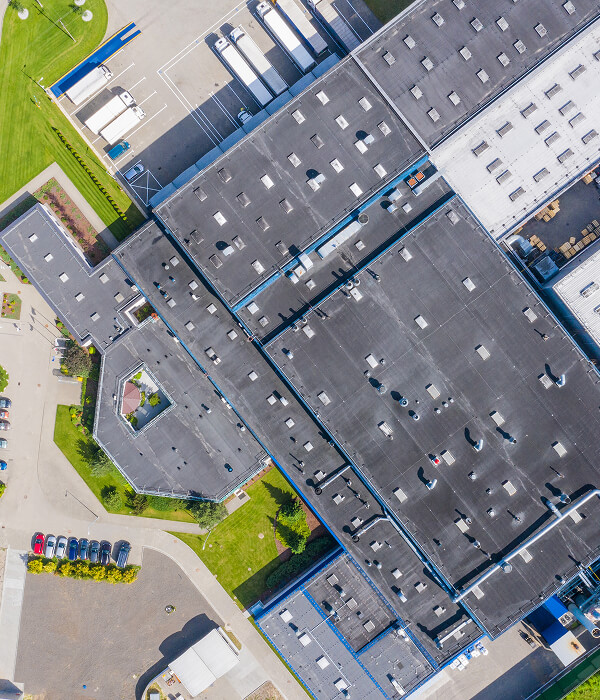
Modified bitumen is an asphalt-based membrane system enhanced with polymers for flexibility and strength. It’s often installed as a two-ply system and can be applied with torches or other approved methods based on site needs, weather, and occupancy constraints. They’re durable and faster to install than a BUR system.
Learn More
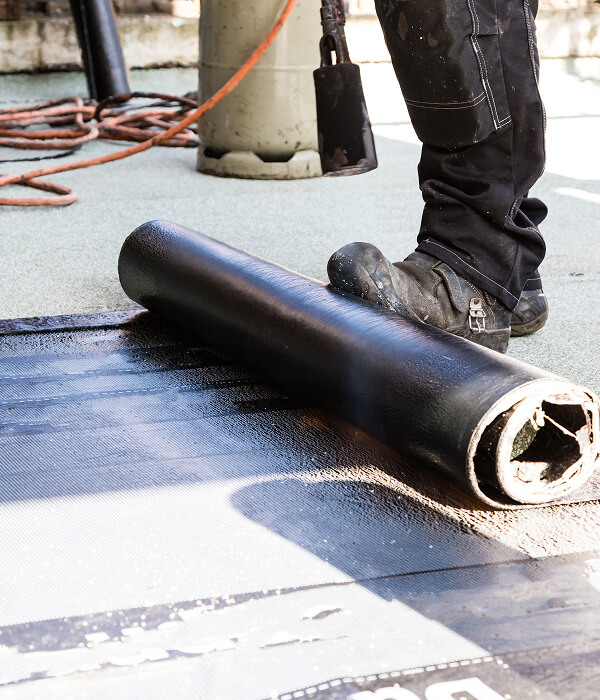
Some commercial roofs have steep-slope sections—entries, towers, or sloped wings—where an asphalt shingle roof may fit the design. In those cases, architectural shingles (including dimensional or laminated shingles) can provide a durable, affordable solution that is simple to install and integrates with larger commercial roof assembly.
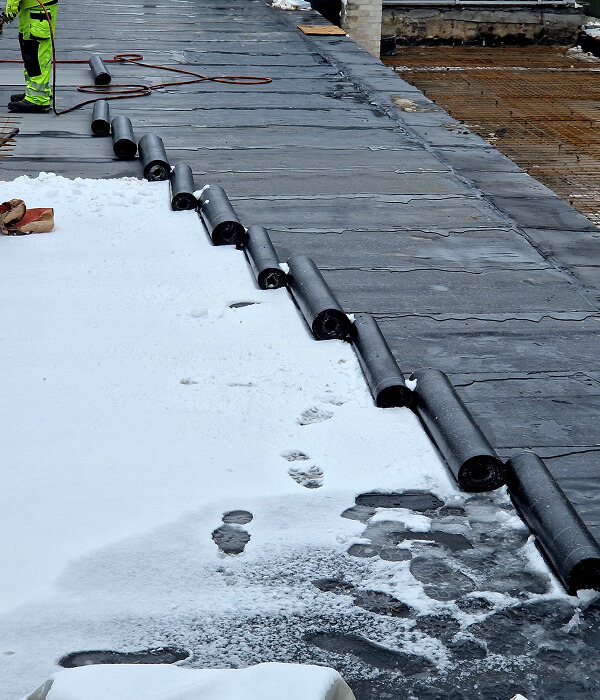
On mixed-slope properties, hybrid systems may combine modified bitumen on flat roof areas with limited asphalt shingle coverage on steep-slope transitions. The goal is continuity—details, terminations, and transitions that protect the full roof assembly and reduce vulnerability at system changes. These hybrid systems highlight the versatility of asphalt commercial roof systems.
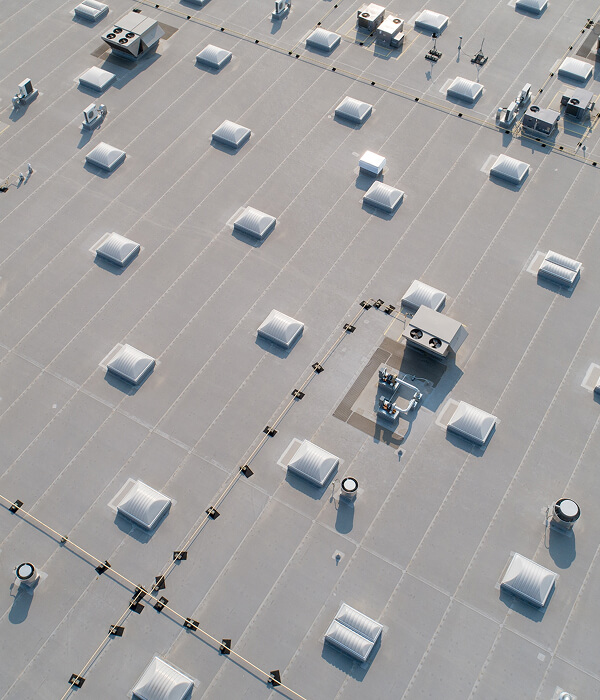
A key reason commercial asphalt roofs remain popular is redundancy. Multiple plies and surfacing choices give the system “depth”, so minor damage to the top layer doesn’t immediately constitute an emergency. This matters when a commercial roof supports mechanical traffic and frequent maintenance.

When commercial asphalt roofing is detailed correctly, localized repairs can be practical. This can mean isolating an issue near a penetration, replacing a section of membrane, and restoring surfacing. During unexpected crises, asphalt roofing turns a full replacement discussion into a manageable problem. This is one critical reason asphalt stays relevant among roofing materials.

Facilities with HVAC units, rooftop piping, and regular service visits put stress on the roof surface. Built-up roofing and modified bitumen are commonly chosen because they tolerate traffic and can be reinforced in high-wear zones. For many building owners, that durability is a core decision driver.

The roofing industry has decades of performance data on asphalt-based commercial systems. That history makes it easier to plan maintenance budgets, predict wear patterns, and build realistic expectations for service life. It’s far more about predictability than trends, which is more important to most commercial building owners and property managers.

Asphalt-based systems are just that: a system. There are different plies, surfacing approaches, and attachment methods implemented depending on wind exposure, temperature swings, and use conditions. That flexibility helps a roofing contractor tailor the roof assembly instead of forcing a one-size approach across every facility.

Where heat gain is a concern, reflective cap sheets and rated products can support energy efficiency goals. Some assemblies may align with Cool Roof Rating Council listings when specified correctly or coated with a cool-roof coating. Meeting building efficiency standards, among other reasons, is critical in choosing asphalt-based roofing systems.


Asphalt-based commercial roofing systems are often a strong fit for universities, manufacturing facilities, healthcare campuses, and multi-family portfolios. This is especially the case where large commercial roof footprints, rooftop equipment, and service access are part of daily operations.
Asphalt roofing systems perform well in these environments because they are designed to handle the operational demands common to large commercial properties. Many of these buildings rely on extensive rooftop mechanical systems and maintenance traffic, or require durable roofing that can tolerate equipment vibrations and service access. The repair flexibility of asphalt systems can be especially valuable after storms, unexpected leaks, or equipment failure.
For low-slope commercial roofs, commercial asphalt roofs provide durability, repair flexibility, and simple maintenance needs. When compared with other roofing materials, asphalt systems often shine in traffic-heavy use cases, and there’s an asphalt system that will work for most roofs.
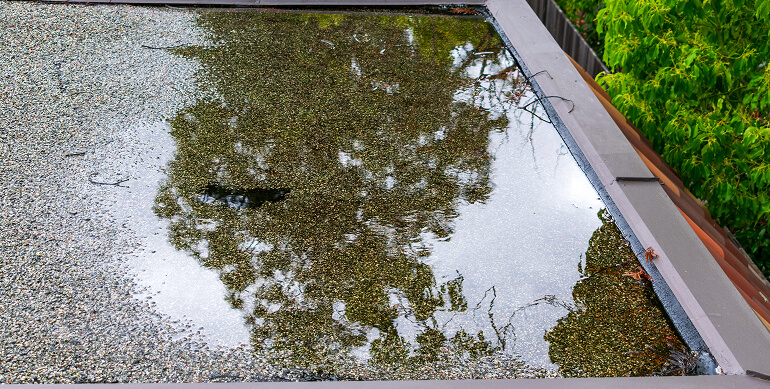
Ponding isn’t just standing water. The weight of water can cause long-term stress on a roofing membrane and seams. Champion evaluates drainage points, tapered insulation options, and deflection issues so commercial asphalt roofs shed water properly. The goal is to reduce chronic moisture load and protect the full roof assembly over time. When water intrusion does occur, Champion quickly identifies the source and stabilizes the area so property teams can prevent leaks from spreading.
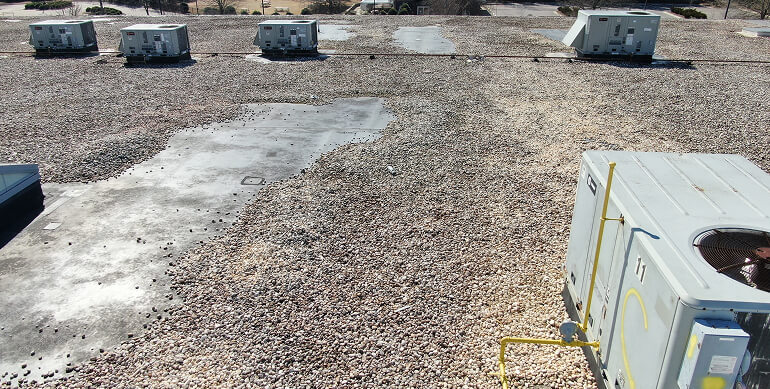
Seasonal temperature swings or unexpected weather change can fatigue seams and terminations, especially on large flat roof areas. With modified bitumen, we focus on correct detailing at transitions, penetrations, and perimeter conditions to manage movement. This attention keeps commercial asphalt roofing stable where stress tends to concentrate.
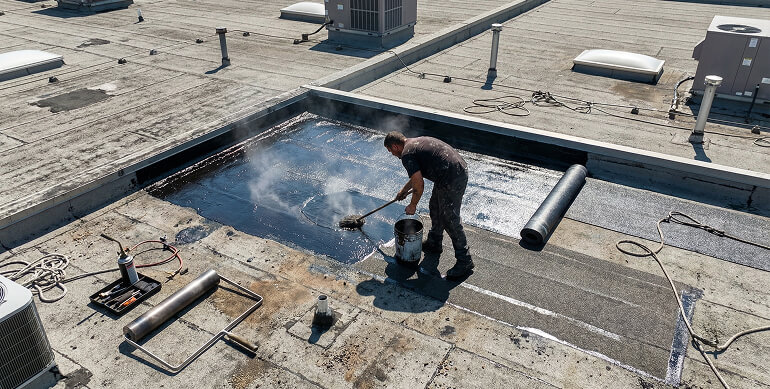
Asphalt systems reward good installation and equally punish shortcuts. Whether the project uses hot asphalt or other approved methods, Champion follows controlled installation practices and quality checks. A disciplined roofing contractor’s approach is what turns asphalt roofing into a long-term asset instead of a recurring problem.
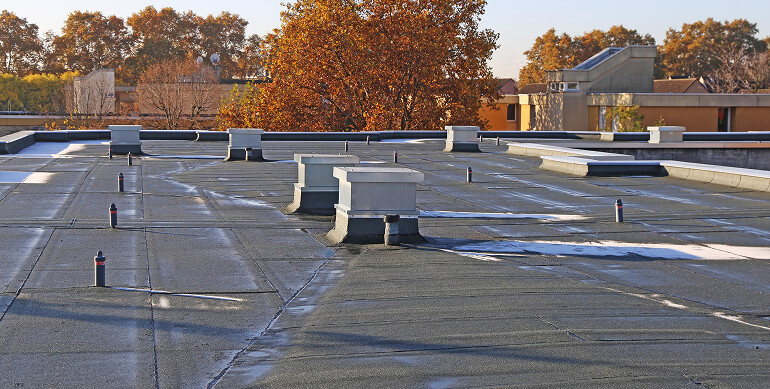
Many facilities use multiple roofing systems across one campus. While not an inherent problem, it does take some coordination. Champion plans tie-ins between asphalt roofing, adjacent membranes, and metal terminations so the system behaves as one envelope. That’s especially important for commercial asphalt roofs that transition at walls, curbs, and equipment platforms.
| System Type | Lifespan | Maintenance Needs | Installation Costs | Best For |
|---|---|---|---|---|
| Metal Roofing | 40–70+ years | Minimal | Higher upfront | Structural strength, long-term durability |
| Single-Ply (TPO/PVC) | 20–30 years | Low | Moderate | Large open roof areas |
| Modified Bitumen | 20–25 years | Moderate | Moderate | Traffic tolerance, flexibility |
| Built-Up Roofing | 20–30 years | Moderate-High | Moderate-High | Multi-layer redundancy |
Usually not. Commercial asphalt roofing typically means BUR or modified bitumen; shingles are limited-use in commercial applications.
Many perform 20 to 30 years, depending on maintenance, environmental or mechanical exposure, and roof assembly design. Regular inspections help to identify small issues early on so repairs can be made.
On steep-slope sections—entries or sloped wings—where shingles fit the architecture. They are typically not used on the main commercial roof deck.
BUR uses multiple felts set in asphalt; modified bitumen uses factory sheets with polymer-modified asphalt, usually installed with a torch to heat the asphalt. Both systems offer durable protection, but modified bitumen allows faster installation and straightforward repairs.
Yes. These systems are often selected for buildings with heavy rooftop equipment because they tolerate traffic well and can be reinforced.
It can, especially with insulation, reflective cap sheets, and properly specified surfacing options.
We weigh how the roof is used, drainage, environmental and mechanical exposure, maintenance expectations, and lifecycle cost. Then, we look at how quickly potential issues can be resolved, and match the system accordingly.
Schedule a commercial roof evaluation to determine whether asphalt roofing or shingles aligns with your building’s long-term performance, risk management, and capital planning strategy.
"*" indicates required fields


